Poem: Before Adam Ate

adam-eve-garden-art-lds-1298393-gallery (1)

We have been studying the Creation and the Fall of Adam and Eve in Sunday School. I wrote this poem in 1976.

Before Adam Ate

The piling storm clouds shade the bitten fruit,
and I would throw it down, but I must keep
these promises that in their keeping take
the promised innocence from his bright eyes
and shadow them with knowledge, like my own.

Could I stay here and watch his childlike joy,
and hide the bitter wisdom I have gained?
Should I leave now, bereave him of his bride,
but not of his obedience and life?

No, he must choose to follow in this death,
to feel bones weaken, eyes strain, muscles ache,
to feel his death begin with that first bite,
to sorrow in the joy of God’s good pain.

Forgive me, love. I hear you coming now.

Lisa Bolin Hawkins

Poems: Christmas Offerings

mary-and-the-resurrected-christ-39605-gallery

These are two of my Christmas poems, one from 1980, the other from a few days ago, in 2017. My relationship with the Savior has changed and grown in those 37 years, and will, I hope, continue to grow. Merry Christmas to all, and peace on Earth.

Christmas Offering (1980)

I close my eyes in prayer, and try to see
Thy listening omnipresence on a throne;
To see the more-than-whiteness, and to hear
Celestial spheres and hosts combine to sing
A worthy harmony to Thy great love.
I know that Thou must dwell in such a place,
But my Earth-laden heart cannot find Thee
In any setting closed to mortal eyes.

My prayerful mind must turn to Bethlehem:
The rough-soft hair and breathing warmth of cattle,
The pain and blood of birth’s grip on a womb,
The peace of a newborn, eternal child.
These things I know. I know the smell of hay;
The sleep of a new mother; a new babe.
Although I search through all the realms of Heaven,
I kneel beside a manger to find Thee.

Another Christmas Offering (2017)

I close my eyes in prayer and feel Thy love,
Thy presence in my reverent, seeking heart,
Remembering: without Gethsemane,
And Calvary, and glorious garden morn,
The story of the night in Bethlehem
Would never have been told. The Son of Man,
Born humble Mary’s Son, is here with us.
His kingdom on the earth and in the heavens.

Give glory to His gracious sacrifice
While time turns to surrounding stable walls,
Then into time’s first garden, where our God
Presented a Redeemer for us all,
Then arcs to second, glorious return:
His kingdom all in all’s eternal round.
And I can search through all the realms of Heaven,
Through all the realms of earth, the singing stars—

I kneel beside a manger to find Thee,
While kneeling, weeping at Thy wounded feet,
And at the quiet altars of Thy house,
And praising in forever yet to come.
All time and space are holy to Thy name:
It echoes quiet in my heart and mind,
Even as I shout creation’s joy
Again, and yet again, and Thou art there,
And here. Love listening to my whispered prayer,
Yet crowned in circles of eternity.

Lisa Bolin Hawkins

Myths about Ministering, Myth 7: “My sister is (or I am) serving in the Primary, Nursery, or Young Women—she doesn’t (or I don’t) really feel like part of Relief Society. We don’t need to participate in ministering.”

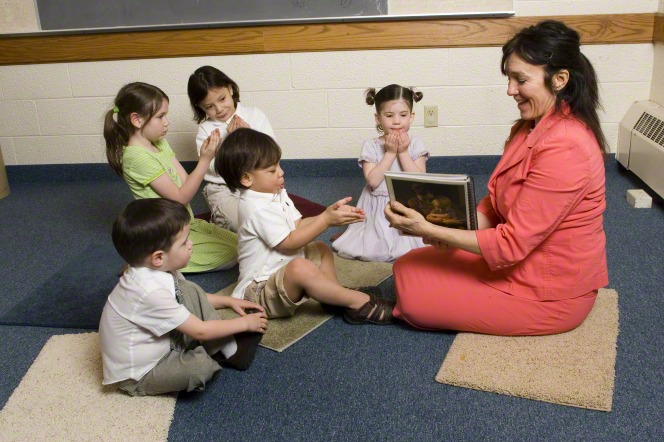
teaching Primary

Myths about Ministering, Myth 7: “My sister is (or I am) serving in the Primary, Nursery, or Young Women—she doesn’t (or I don’t) really feel like part of Relief Society. We don’t need to participate in ministering.”

Sisters who have callings in Primary (including Nursery) or Young Women may feel isolated from the rest of the ward or from other sisters in Relief Society. They may feel that ministering is not very important. Yet these sisters may need ministering sisters even more than those who are able to attend the Relief Society class on Sundays and get to know each other there. All adult sisters are an important part of Relief Society and of ministering.

 Challenges of Working in Primary

Sisters serving in Primary may be especially isolated from other sisters. They don’t attend adult Sunday School or Relief Society—they come to sacrament meeting and then go to the Nursery for two hours, or to their Primary classes and sharing time. Primary leaders and teachers are necessarily focused on the children and their needs during Sunday meetings. And sisters serving in Primary may be relatively unknown to Relief Society leaders.

Feelings of isolation may be compounded if sisters are called to serve in Primary when they are new in a ward, before they have a chance to get to know other sisters. If they don’t come to Relief Society weekday meetings, aren’t part of ministering, or don’t have other contact with LDS sisters (such as neighbors in areas where there are many Church members), these sisters may not feel that they belong to Relief Society at all. It is possible for a sister who has never had a chance to serve as a ministering sister, or a chance to attend Relief Society in a family ward, to find that she is adjusting to a new ward and adjusting to a new calling in Primary or Young Women, without a chance to become acquainted with other sisters in the ward, or to see Relief Society or ministering in action. Some of these sisters will also be newly married, or perhaps soon to be expecting or welcoming a first child, and making those tremendous adjustments, too.

What Do Primary Teachers Say About Their Callings?

As I have talked with sisters who are called to serve in Primary, some would prefer serving in Primary than in any other calling. Others are happy to work in Primary for a time, feeling that they are taking their turn, learning to work with children, and serving the Lord in that way.

Yet others may feel that they are serving time, as in a prison, rather than spending time serving—they have accepted their callings obediently, but may feel isolated from others in the ward.

And all these sisters, no matter how happy they are to serve in Primary, Nursery, or Young Women, seem to share a feeling: “I never know what is going on in the ward.”

Ministering and Service in Primary or Young Women

Any sister serving in Young Women or Primary may be an active giver or receiver of ministering. But if she is not, and does not see any reason to be, that is a problem, because ministering is means by which the Lord has commanded that each sister be known and loved, be strengthened in her faith, and receive service in times of need (see Handbook 2, Administering the Church 9.5.1). The opportunity for sisters to give and receive ministering is important to the Lord—it is way that each of His daughters has sisters to watch over her temporal and spiritual well-being, and each has the opportunity to serve her sisters and the Lord in turn.

Suggestions for Leaders

What can we do? Here are some suggestions:

(1) The bishopric could see that the ward has an excellent and well-delivered newsletter, whether or not it’s combined with the Sunday sacrament meeting program, and encourage the editor to gather and include news and announcements as though it were people’s only source of information about ward, stake, and (to a point) general Church news and events. Regular reports from Ward Council to the newsletter editor, as appropriate, could be assigned. The ward executive secretary could send the newsletter editor a copy of the sacrament meeting agenda, so that information about callings and releases; baby blessings; Primary, Young Women, and priesthood advancements; and other ward business can be included accurately in the newsletter. The newsletter can supplement the fleeting announcements in sacrament meetings and Relief Society, which are sometimes incomplete and are not heard by everyone.

(2) The Relief Society presidency could work closely with the Young Women and Primary presidencies (something that could be coordinated in Ward Council) to give information, appreciation, and encouragement to the sisters serving in Primary and Young Women. Relief Society leaders could see that the opportunities circulated on clipboards in Relief Society meetings are made available to sisters in Primary and Young Women in a manner that is not a distraction while they are serving on Sundays.

(3) The stake Relief Society, Primary, and Young Women presidencies could work together to encourage the ward presidencies to be aware of the needs of sisters serving in Primary and Young Women.

(4) The Relief Society presidency could work with ministering sisters to provide timely information and invitations to sisters serving in Young Women and Primary about weekday meetings, conferences, and other Relief Society events.

(5) The bishopric and Relief Society presidency could see that sisters serving in Primary and Young Women are able to attend Sunday Relief Society meetings from time to time (perhaps quarterly) by arranging for Young Women and priesthood brethren to substitute in their callings. These meetings of the entire Relief Society could be special or regularly scheduled lessons—they probably should be more than lessons about ministering. The flexibility of the new format for Relief Society meetings allows for these meetings to be planned to meet the needs of all sisters. The bishopric, Relief Society president, Sunday School president, and Primary president could consider calling two sets of teachers for each Nursery and Primary class, on a rotating basis, so that Nursery and Primary teachers could attend Relief Society, Elders Quorum, and Sunday School meetings during the month. Problems with staffing the Primary may decrease now that Primary lessons are just 20 minutes long (although teachers still attend the entire hour, and Nursery leaders are with their children for the entire hour), but the lack of continuity in teaching may be considered a negative result for children.

(6) The Relief Society president could consider, as she makes ministering assignments, if sisters teaching in Young Women and Primary could be assigned to give and receive ministering with sisters who are not also serving in Primary and Young Women. A good mix of sisters who are experienced with ministering and attending the Sunday Relief Society classes with sisters who are less experienced, or are serving in the Primary or Young Women, could be considered. The need for continuity in ministering assignments will need to be balanced with this suggestion. In wards with a high turnover of sisters, this suggestion will make it more difficult to keep up with ministering assignments among new and more established sisters in the ward, but the opportunity for sisters to enhance their testimonies of ministering could be a great blessing.

(7) The bishopric could consider, as they call sisters to serve in Primary and Young Women, whether a sister is new in the ward and has had the opportunity to feel that she is part of the Relief Society sisterhood.

Some of these suggestions may not always be practical, and they could require additional work by busy leaders. Also, many of the thoughts in this essay apply to brethren serving in Primary and Nursery, or with Aaronic priesthood boys, as well as to sisters—which suggests parallel action on their behalf by priesthood leaders. This essay is meant to help begin a discussion that could lead to increased unity and participation by all sisters in Relief Society, as that organization “helps prepare women for the blessings of eternal life as they increase faith in Heavenly Father and Jesus Christ and His Atonement; strengthen individuals, families, and homes through ordinances and covenants; and work in unity to help those in need.” (Handbook 2: Administering the Church, [2010], 9.1.1.)

Edited and revised 23 January 2019.

Poem for Christmas: The Midwife’s Poem

Bible Videos nativity

I wrote this poem last year as part of a Christmas talk I gave in Church. I think we were all there, singing with the heavenly host, on that supremely important night in Bethlehem. May our hearts continue to sing His praise at Christmas and every day.

The Midwife’s Poem

I’d been up all the night before
with another babe. This was a few more than
thirty years back. The innkeeper’s girl
came running; said it was the woman’s first child—
And you never know how that’s going to be.
I got a lantern and my things and went out.
It was a lovely, soft night, with starlight
falling to earth like white veils,
but the streets were crowded because of the Roman census.
The girl didn’t take me to the inn, but back where the
animals were. The man and his wife had come from Nazareth.
I remember she was charming, even at her time.
I liked the look of him, too, like he was about to be a father
and knew what that might mean, as much as anyone can.
I sent the girl away and tried to shoo the husband out
but he wouldn’t go; said he’d help, and he got water and put
clean hay in an old manger, and sponged off her face.
I’ve since wondered what happened to them.
I tried to reassure her—first babies take their time.
Between her pains, I asked if she thought it was a boy or a girl
and they both said, “It’s a boy,” like they had some way of
knowing. And as it happened, they were right: a fine boy,
who cried out right away. I cleaned him off and wrapped him up
and put him in her arms—he stopped crying.
I know you won’t believe this, but it happened just this way:
When the babe fell silent, off in the distance,
like children and men and women all together,
and maybe the angels with them in that starlight—
I heard the most beautiful song.

Lisa Bolin Hawkins, December 2016

Poem: The Baptism of Eve

adam-eve-altar-39689-gallery

As I have studied the account of Adam’s baptism in the Pearl of Great Price, I have wondered about Eve’s baptism. This poem is my imagination of that great event.

The Baptism of Eve

Moses 6:64–68 (Pearl of Great Price):

And it came to pass, when the Lord had spoken with Adam, our father, that Adam cried unto the Lord, and he was caught away by the Spirit of the Lord, and was carried down into the water, and was laid under the water, and was brought forth out of the water. And thus he was baptized, and the Spirit of God descended upon him, and thus he was born of the Spirit, and became quickened in the inner man. And he heard a voice out of heaven saying: Thou art baptized with fire, and with the Holy Ghost.And thou art after the order of him who was without beginning of days or end of years, from all eternity to all eternity.

She saw that Adam came back from his prayers
a different man.
“The promised day has come,”
he said.
“Your clothes are wet,” Eve answered him,
and brushed a dripping curl that wandered free
from Adam’s glistening brow. He drew her near.
“Come to the clearest pool—”
“Yes, I will come.”
“—the one reflecting heaven. I, by right,
can do for you the service I received
from Holy Spirit’s love.”
“This glorious day
shall see us both renewed, as Father taught,”
the woman said, and took her husband’s hand.

They walked the distance to the waterside—
the pool at the headwaters of the spring.
Eve waded in, head high, as queen to throne,
the grateful heiress of the royal grace.
And Adam stood beside her, said her name,
and laid her into water’s cool embrace,
and called her into depths she had not known.
“This is a type of death,” she thought, and heard
her memory repeat that if she ate
the fruit of knowledge, she would surely die.
“And I have surely died to live in Christ,
as I will surely die, but first will live
to teach my children of His sacrifice,
and mine, and Adam’s. Father, I thank Thee.”
As though no time had passed, she rose again,
Streaming joy to morning new in life.
Beside the pool he laid hands on her head
and gave the Holy Spirit as a gift.

From then they took their water from the place
where that pool fell out clean over the rocks,
and named the falls a holy source of life.
There Adam built an altar and they prayed.
The two remembered always that their hopes
were answered with the kindness of the Lord,
in making a way back to heaven’s shores.

—Lisa Bolin Hawkins

“I Will … Sanctify to Thee Thy Deepest Distress” (Poem: No Regrets)

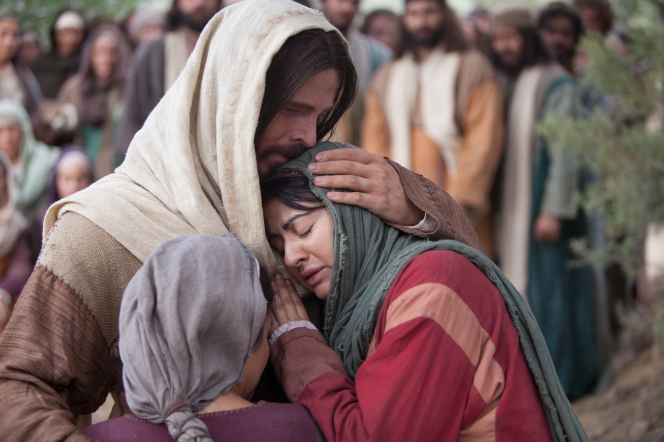
Jesus comforts Mary and MarthaWe may sometimes feel that we will never heal from things that have happened to us, or from regrets for things we have done or have not done. The Lord has promised that in the next life, He “shall wipe away all tears from [our] eyes, and there shall be no more … sorrow, nor crying, neither shall there be any more pain …” (Revelation 21:4). How is He going to do that? How can the memories of past pain or of our regrets ever be sweet or holy to us?

Elder Dale G. Renlund of the Quorum of the Twelve Apostles of The Church of Jesus Christ of Latter-day Saints addressed this topic at a multi-stake women’s meeting in Provo, Utah, on 11 November 2017. Elder Renlund quoted the Christian scholar C. S. Lewis, who wrote in The Great Divorce: A Dream (2001), 69 (chapter 9) [Elder Renlund also quoted this in his conference talk in April 2018, “Family History and Temple Work: Sealing and Healing,” available at lds.org]:

[Mortals] say of some temporal suffering, “No future bliss can make up for it,” not knowing that Heaven, once attained, will work backwards and turn even that agony into a glory. … The Blessed will say, “We have never lived anywhere except in Heaven.”

Our Savior can, through His mercy, help us to gain a celestial perspective on the painful experiences of our lives. In this way, heaven can “work backwards” to turn the painful and difficult experiences of mortal life into glorious remembrances. The Lord’s holy and heavenly therapy for these post-traumatic stresses will “sanctify to [us our] deepest distress” (Hymn 85, “How Firm a Foundation”).

The Old Testament prophet Joel told of a terrible drought and plague of locusts that  occurred in the land of Judah. However, after the people had repented and turned their hearts to the Lord, God promised in Joel 2:25:

I will restore to you the years that the locust hath eaten.

He who was sent to “heal the brokenhearted” (Luke 4:18) will restore us to wholeness. That which we thought was lost will be found (see Luke 15:11–32)—presented to us with His redeeming love: not new, but burnished with the deep, blazing light of mature reflection and gratitude. As He promised the prophet Joseph Smith, whatever happens, “All these things shall give thee experience and shall be for thy good” (D&C 122:7).

Meanwhile, as Elder Jeffrey R. Holland taught in his talk, “Like a Broken Vessel”:

Above all, never lose faith in your Father in Heaven, who loves you more than you can comprehend. As President Monson said … : “That love never changes. … It is there for you when you are sad or happy, discouraged or hopeful. God’s love is there for you whether or not you feel you deserve [it]. It is simply always there.” Never, ever doubt that, and never harden your heart. Faithfully pursue the time-tested devotional practices that bring the Spirit of the Lord into your life. Seek the counsel of those who hold keys for your spiritual well-being. Ask for and cherish priesthood blessings. Take the sacrament every week, and hold fast to the perfecting promises of the Atonement of Jesus Christ. Believe in miracles. I have seen so many of them come when every other indication would say that hope was lost. Hope is never lost. If those miracles do not come soon or fully or seemingly at all, remember the Savior’s own anguished example: if the bitter cup does not pass, drink it and be strong, trusting in happier days ahead.

(Available at lds.org, footnotes omitted.)

Here is a poem I wrote in winter 2017 about this idea:

 No Regrets

I will restore to you the years that the locust hath eaten. Joel 2:25.

Some years I chose drought,
and all but invited the locusts to descend.
Other times I neglected the fields.
At times others caused the drought
or sent the locusts;
my joy was withered by their decisions.

I thank Thee for the promises:
Thou hast felt my fasting with me.
I thank Thee for the healing:
I knew it would come someday
like the rustle of wings.
I thank Thee for those who
take my hands and bring me into the
solemn assembly of tear-stained hopes,
and at last to the harvest of rejoicing.

But I wonder about the fields I never saw green,
the gathering I did not help,
the altars where I did not kneel.
My heart wilts for all I did not choose
and all that others chose to deny me.

And yet—Thou hast always known the
righteous desires of my heart;
and in Thy mercy promised,
to meet my regrets with grace—
I trust Thy loving kindness
to restore all that I lost.

—Lisa Bolin Hawkins

Edited 19 September 2018.

Poem: Late Autumn Night

Autumn Night

Written years ago and revised today, this seems like the perfect poem for the coming night.

Late Autumn Night
Unseen leaves skitter past
In the shadows cast by the frost-calling moon
Hung ominous in the trees:
It sings the newly cold wind–
A wind of harvest past, brown grass;
Not quite numb to the heart,
But dangerously near.
A season is dying here,
And all its bones
Are rattling along the ground,
Whispering, “Hurry, hurry, haste:
This bare gray chill is not for you–
We rush to a hopeless grave;
You are of mercy and grace:
The lamps of home.”

–Lisa Bolin Hawkins

Myths about Ministering, Myth 6: “It doesn’t matter if I report my ministering efforts, especially if I didn’t do anything.”

RS image 1

Part of ministering is a quarterly interview (or additional contact as needed) with a member of the Relief Society presidency to counsel together about the sisters to whom we minister, their needs, and our contacts with and service to them. It could be a brief, casual report or something a little more formal, and ideally would include both companions. And when a sister needs service beyond that which we or our companionship can provide, we need to contact a member of the Relief Society presidency or the bishopric to ensure that her and her family’s needs are met.

Why do we need to report our ministering efforts?

  • This is the Lord’s plan for seeing that every sister in the Church has at least two people who are looking out for her and to whom she can turn for help, and the Lord and those who administer the program have asked us to report. If that’s not enough, then
  • The ministering reports give the Relief Society president and, through her, the bishop, a good picture of how the ward is working (or not) as an extended support system;
  • The stake president needs to know about ministering in the stake, and it’s hard for him to know how things are going if he doesn’t have accurate reports; and
  • Reports of service let our ward leaders know the depth and breadth of, and needs for, service in the ward. If we think of ministering reports as unimportant numbers or statistics (even though they may represent an important program), consider that without the statistics we don’t know if or how well the program is working. Without our reports, our leaders can’t know if we are keeping the commandment to “sincerely come to know and love each sister, help her strengthen her faith, and give service” (Handbook 2: Administering the Church, section 9).

Even (or perhaps especially) if we are having problems with ministering, the quarterly interview gives us and the Relief Society presidency important information about what is happening with our sisters. And the interview is a good reminder to ponder and pray about our connections to our companion, our sisters, every sister in the ward, and most important, to the Savior.

“We are here on this earth to learn and grow, and the most important learning and growing will come from our covenant connection to Heavenly Father and Jesus Christ. From our faithful relationship with Them come godly knowledge, love, power, and capacity to serve.”

–Neill F. Marriott, “Abiding in God and Repairing the Breach,” https://www.lds.org/general-conference/2017/10/abiding-in-god-and-repairing-the-breach?lang=eng

Edited and revised, 4 August 2018.

Poetry: Companion for the Journey

provo-city-center-temple-1572517-gallery

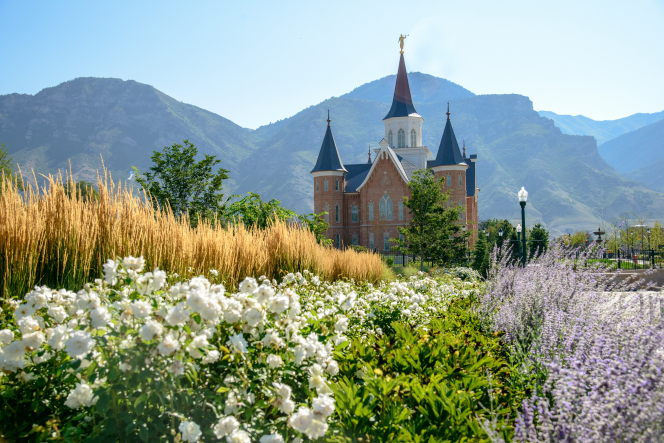
How grateful I am for the doctrine of eternal marriage and families, as symbolized by this picture of the Provo City Center Temple of The Church of Jesus Christ of Latter-day Saints (“our” temple). When we get married, we know so little about the ups and downs and everydays that are part of what we hope will be a joyous, forever union of two best friends and lovers. Even after forty years of marriage, I am still working on being good at it, and marveling at the opportunities, successes, failures, and blessings that it brings us as we try to work out our relationship to each other and to the Lord. And it all plays out against the epic background and intimate spaces of our Heavenly Father’s glorious plan. Here is a poem about being married, I hope forever.

Companion for the Journey

I choose you as I’ve chosen you before—
a choice that echoes down time’s mirrored line,
unbreaking, first and last, like our clasped hands,
as you led me through gossamer in white
to kneel with you outside time, inside love.

For years we have created our time-world,
and peopled it and nurtured it as best
we could; we have learned life
and death and opposition in all things.
And we have learned each other, more or less,
while you remain a mystery to me—
a depth that my own depth might never reach;
a power that is other than my own.

You are the men with sun-caught swords upraised,
the men who huddled fearful in the trench,
who trod the silent trail in dappled light,
who cracked the stones in hope and sowed the seeds,
who touched, desired, slept, prayed, wept, worked, blessed,
who stood tall, silent, through the watchful night,
who saw the stars reflected in the sea.

Father, brother, husband, son, and friend—
you hold the earth and skies within your hands.
Behind your eyes the molten worlds are shaped;
their spring is breathed from chaos-fiery night.
And while we meet mortality’s dark blows,
still we can glimpse the light that beacons home.
I choose you yet again, as when I reached
to clasp your hand and thus begin the bond
that seals our timeless, time encircling love.

Lisa Bolin Hawkins
BYU Studies 33:2:311 (1993)

Myths about Ministering, Myth 5: “She’s a strong member of the Church and doesn’t really need us to contact her.”

reading the Ensign

Even the sisters with the strongest testimonies need meaningful contact with their ministering sisters. Every sister needs to know that she can call on her ministering sisters if she needs help—and if we haven’t established a relationship with a sister during her good times, she may not feel comfortable turning to us when life gets tough, or even tragic. Plus, appearances can be deceiving. A sister with a strong testimony may still have health problems, an overwhelming schedule, a child with special needs, or other concerns that could be helped by a listening ear or some understanding help once in a while. And even the strongest testimonies could use encouragement. Do we know what life is like for the sisters we minister to? Would they call us if they needed something, or do they not know us well enough to admit that they’ve reached a vulnerable moment in life? Sometimes life-long friendships develop as a result of ministering assignments. But even when they don’t, part of our stewardship as ministering sisters is to be available to the sisters we visit, whether or not they seem to need us right now. According to the Lord’s plan for His Church, they do need us—right now. We are the eyes, ears, and hands of the Relief Society president, the bishop, and of our Savior, Jesus Christ. We can learn to love the sisters we minister to by getting to know them, through meaningful contact with them on a regular, continuing basis.